After over 16+ years of making sense of data to improve education for development, EPDC has closed out. While most resources can still be accessed, this site is now static and most interactive features have been disabled.
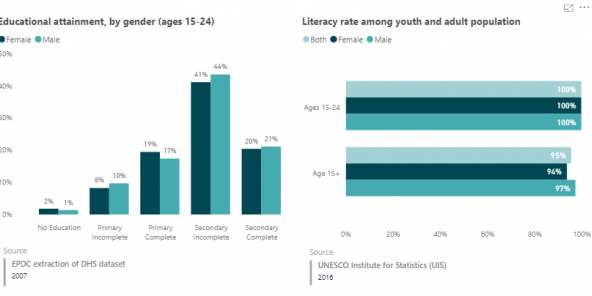
EPDC has updated its country landing pages with new visuals featuring country-specific education data from the EPDC database on school participation, completion, literacy, educational attainment and more!
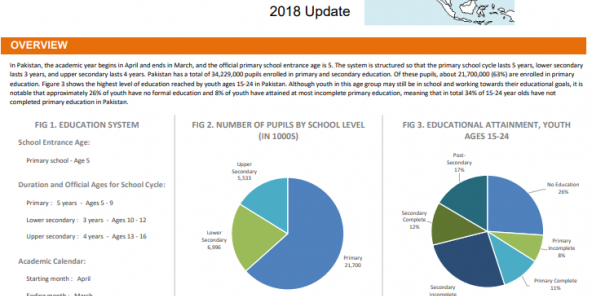
Check out the new 2018 profiles featuring the latest education data on a wide range of indicators including school participation and efficiency, literacy and educational attainment, learning outcomes, and education expenditures.
Learn how EPDC exploits the roll out of universal primary education (UPE) policies in Ethiopia, Malawi, and Uganda as a natural experiment to assess their long-term causal effects on schooling attainment, adolescent sexual and reproductive health behavior, and economic outcomes in its latest research paper.
What are the effects of Read-Aloud (RA) story lessons on reading and math outcomes in Northern Nigeria? Find out how we employ a cluster-randomized controlled trial to assess the efficacy of two types of RAs in this new research paper from EPDC.
The Education Equity Research Initiative is building a stronger knowledge and evidence base for improving solutions for equity in and through education.
The EPDC Data Points blog features interactive content on international educational policy and development. You can subscribe by email or through RSS feed.
Uganda's Universal Secondary Education policy was the first of its kind in Sub Saharan Africa, when it was launched in 2007. What are the equity effects of the policy?
Select the indicators and dimensions that you want to include in your search. The selection of the years will trigger a process to show you the number of results on your search according to the selected criteria.




Social Media